Welcome to Stillwaters Family Counseling, PLLC

Ready for Your Next Step?
A single email is all it takes to schedule a free 15-minute phone consultation with Alice to determine if she is a good fit for your situation!
What is Play Therapy?
Play therapy is a therapeutic approach primarily used with children. It utilizes play to help them express emotions, resolve issues, and develop coping skills.
Definition of Play Therapy
Play therapy is a form of therapy that uses play as a medium for children to express their feelings, thoughts, and experiences. It is particularly effective for children who may struggle to articulate their emotions verbally. Through play, children can explore their inner world, communicate their concerns, and work through psychological challenges in a safe environment Healthline+1.
Play therapy works by using play as a natural language for children, allowing them to express emotions, process experiences, and develop coping skills under the guidance of a trained therapist.
Core Principles
Play therapy is based on the understanding that children often cannot articulate their feelings or problems verbally, so play becomes their primary mode of communication and self-expression (Healthline). Through play, children can explore emotions, confront fears, and work through trauma in a safe and supportive environment (PositivePsychology.com). The therapist observes the child’s play, interprets symbolic behaviors, and gently guides the child to understand and manage emotions (a4pt.org)
What is Sand Tray / Sand Play Therapy?
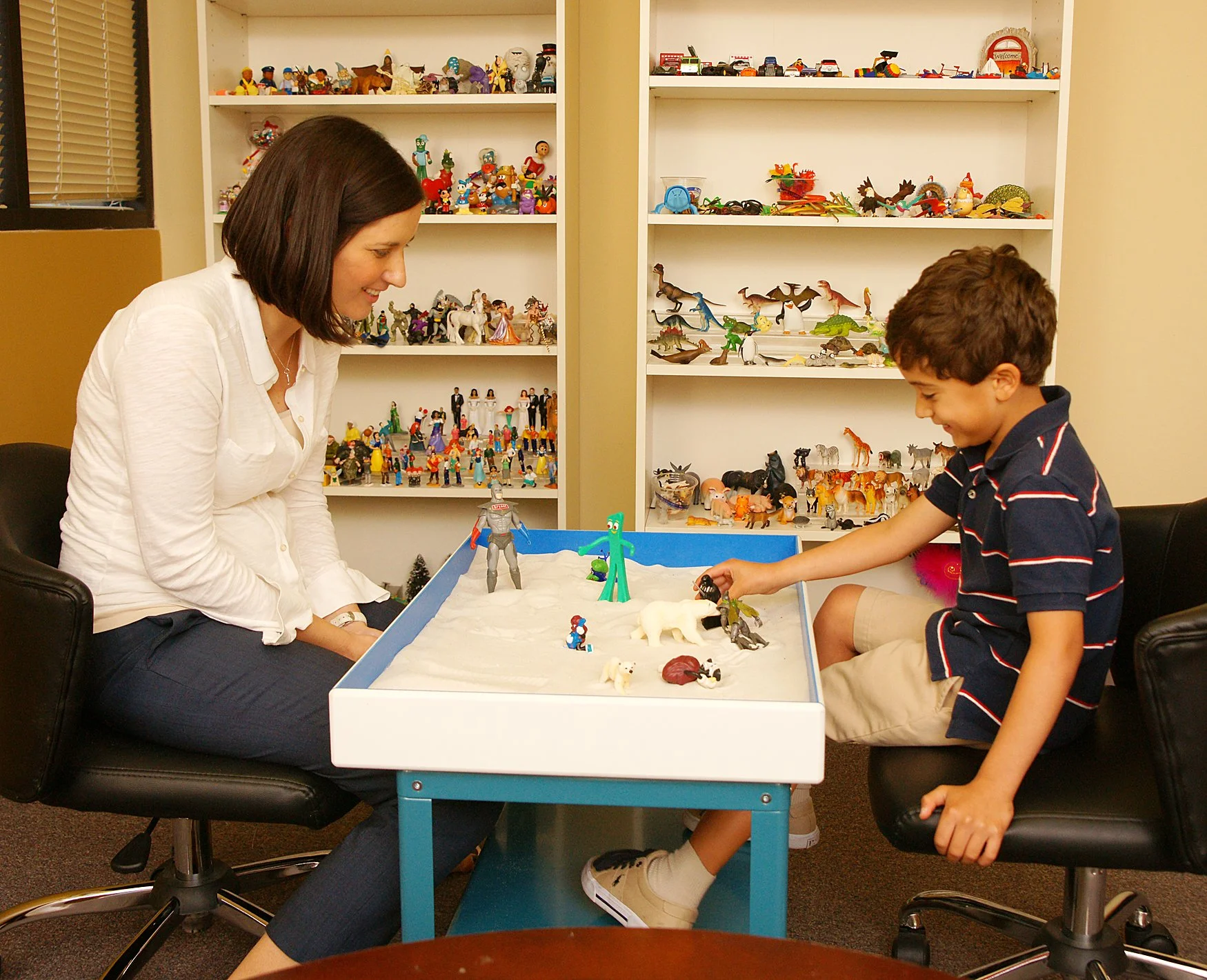
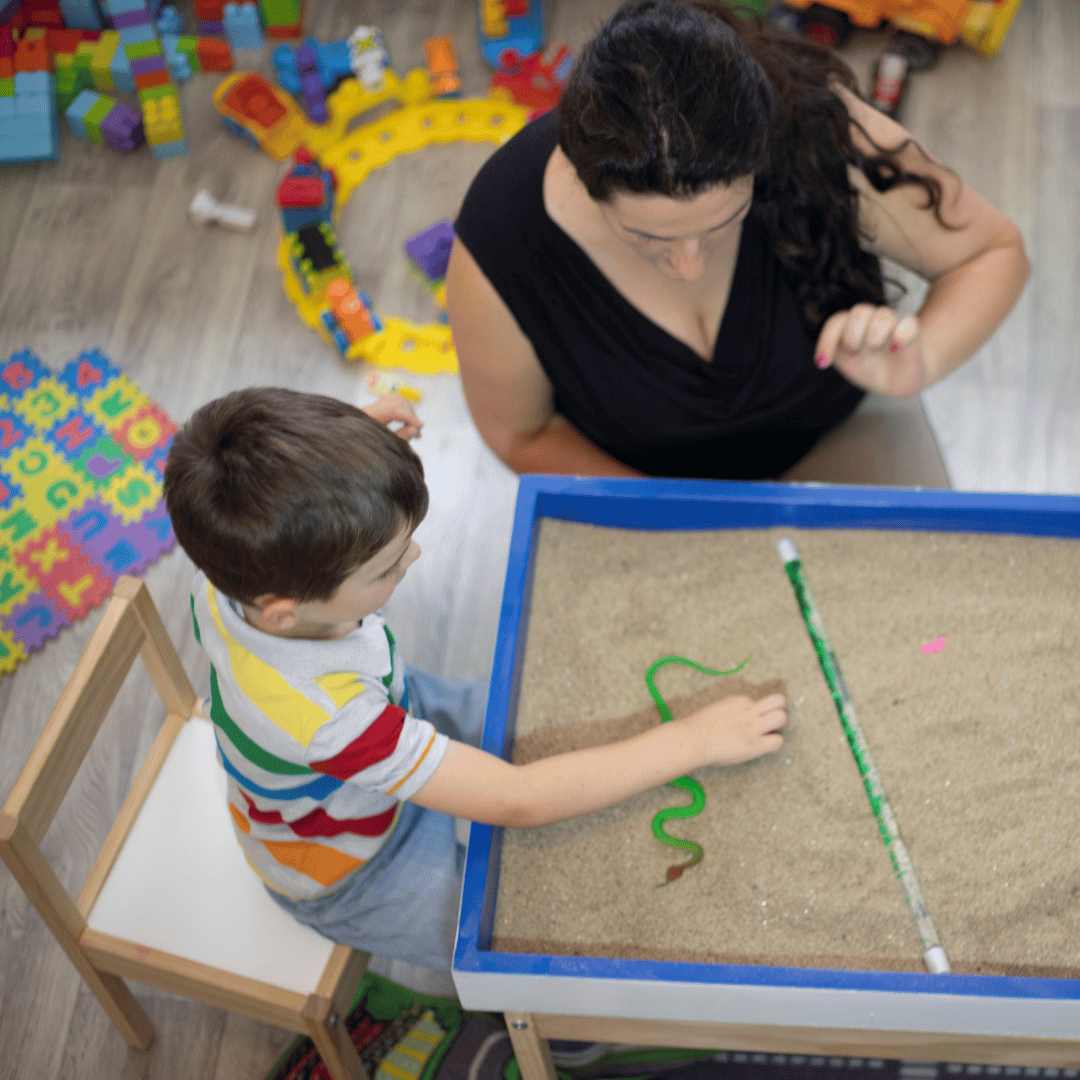
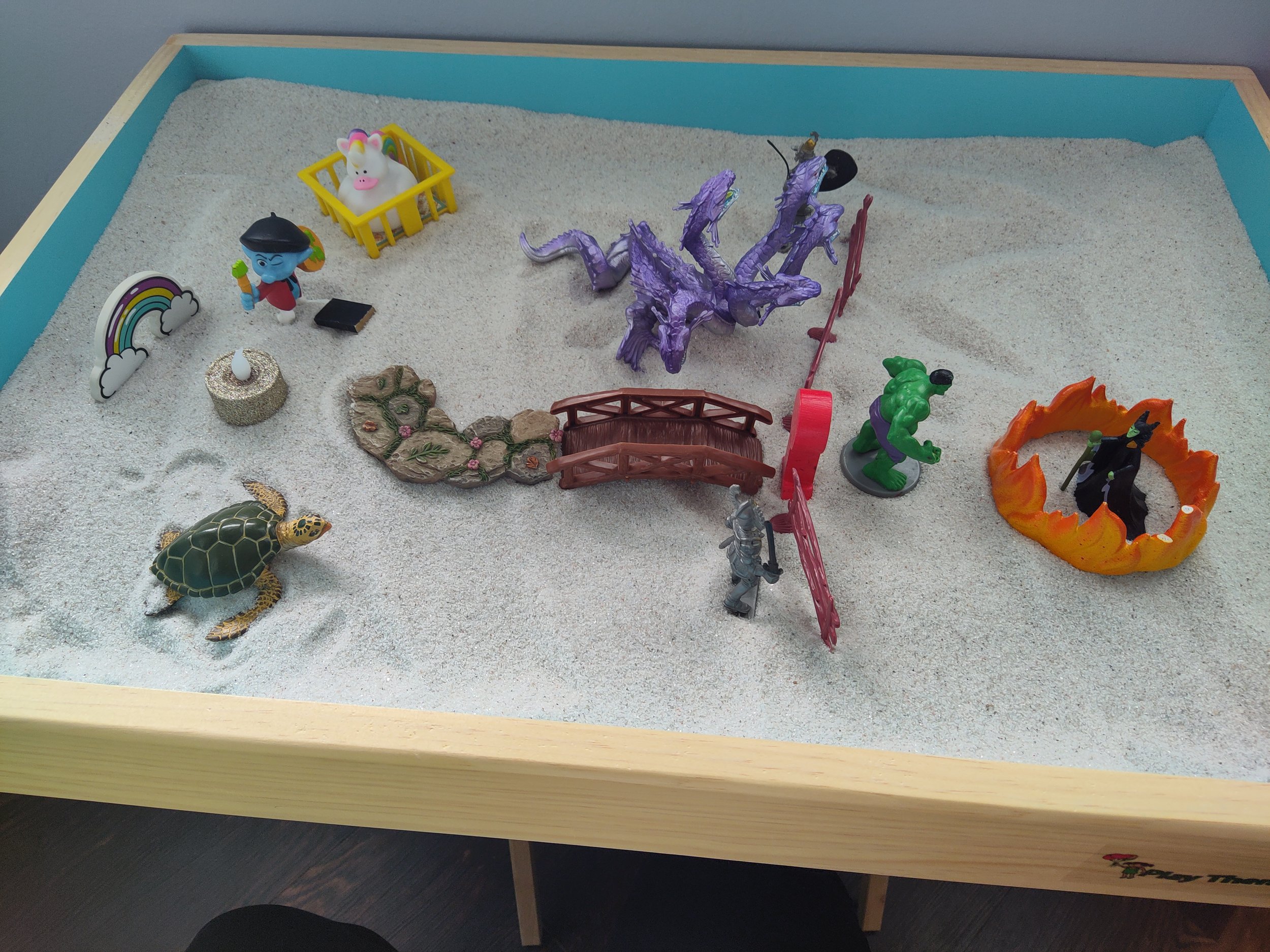
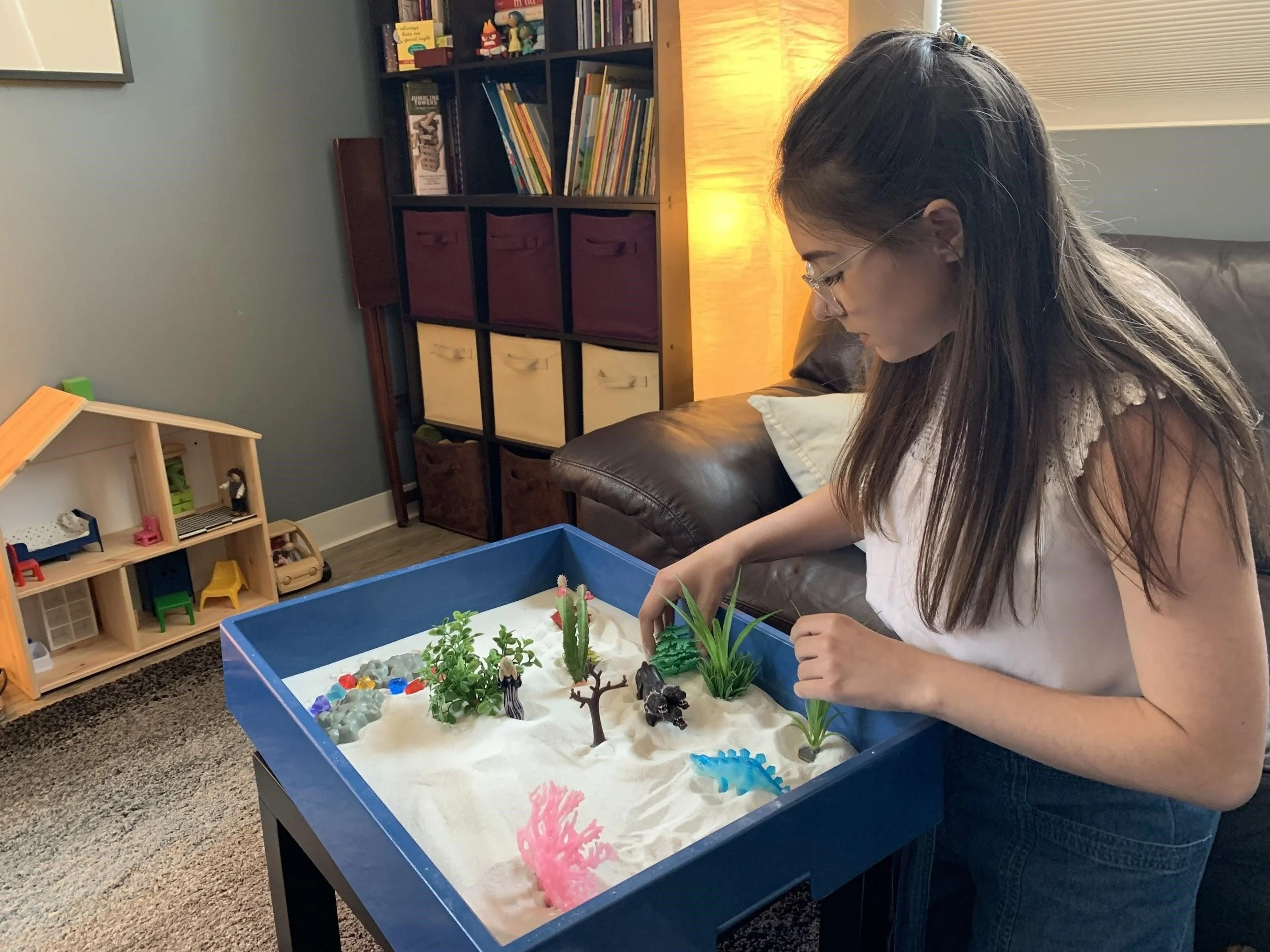
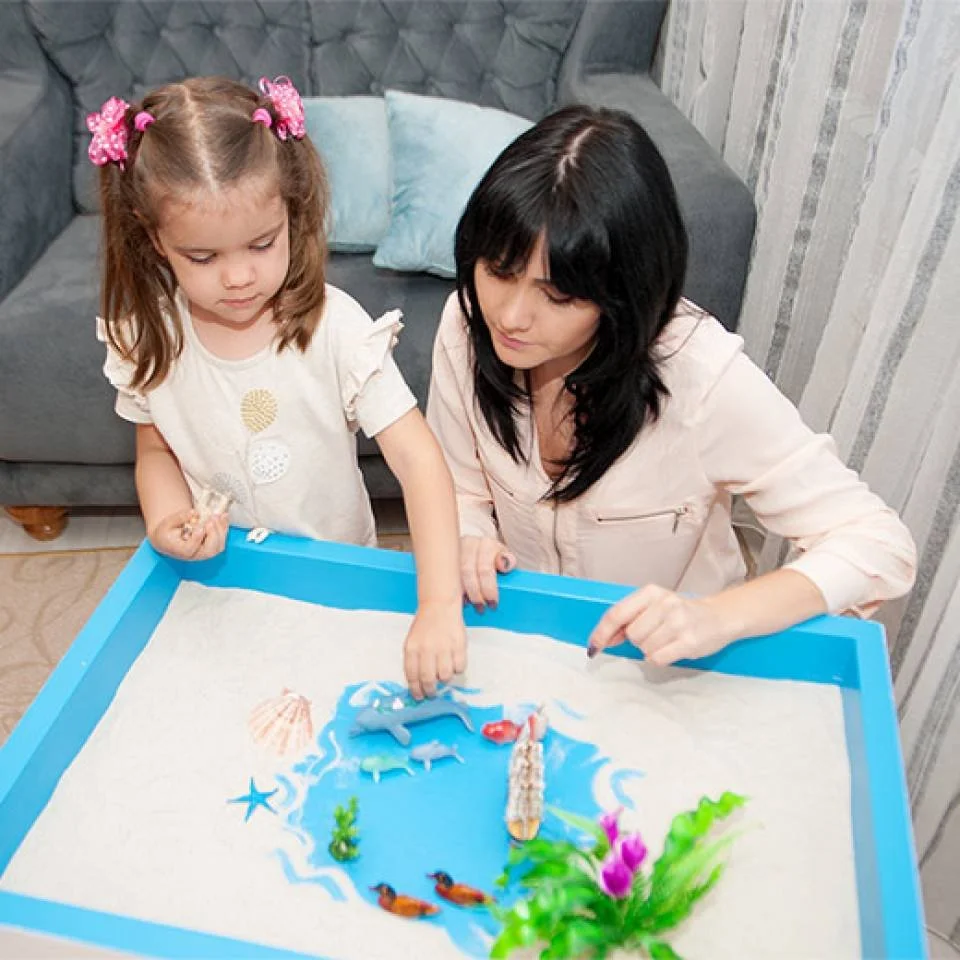
Sand tray therapy is a therapeutic technique where clients use a sand tray and miniature figures to express emotions, explore experiences, and tell stories in a safe, symbolic, and nonverbal way.
Overview
Sand tray therapy, also called sand play therapy, is a form of expressive therapy in which clients create scenes or narratives in a sand tray using miniature figures and objects. This process allows clients to communicate thoughts and feelings that may be difficult to articulate verbally, providing therapists with insight into their inner world (Therapist Aid) It is widely used with children and adolescents but is effective for clients of all ages, including adults, couples, and families (bayareaplaytherapytraining.com).
Therapeutic Benefits
Emotional expression: Clients can express feelings they may not have words for, reducing emotional bottling.
Safe exploration: The sand tray provides a contained, nonjudgmental space to explore experiences and emotions.
Symbolic communication: Miniatures allow clients to symbolize thoughts, relationships, and life events, offering deeper understanding.
Self-esteem and coping: Successfully creating and discussing scenes can boost confidence and help develop healthier coping strategies.
Trauma processing: Sand tray therapy can uncover difficult experiences, making it useful for trauma, anxiety, and relational issues.
Techniques
Client-led (Sandplay): The client freely chooses objects and creates scenes without direction, fostering self-expression.
Directive (Sand Tray): The therapist may provide prompts or themes to guide the session, often used to address specific therapeutic goals.
Creative interventions: Incorporating color, water, mandalas, or sound can deepen emotional expression and regulation